A $6,300 48V Solar-Powered Heat Pump in Climate Zone 4A
Real-World Performance of a 1-Ton DC System in Eastern Pennsylvania
Most solar HVAC systems rely on an inverter to power a conventional 240V mini split.
This system does not.
It is a dedicated 48V DC-native heat pump powered directly from solar and batteries:
Solar → MPPT → 48V battery bank → 48V DC heat pump
No inverter.
Installed in Eastern Pennsylvania (IECC Climate Zone 4A, mixed humid), this system supplements existing HVAC rather than replacing the grid.
Here are the real-world results.
System map
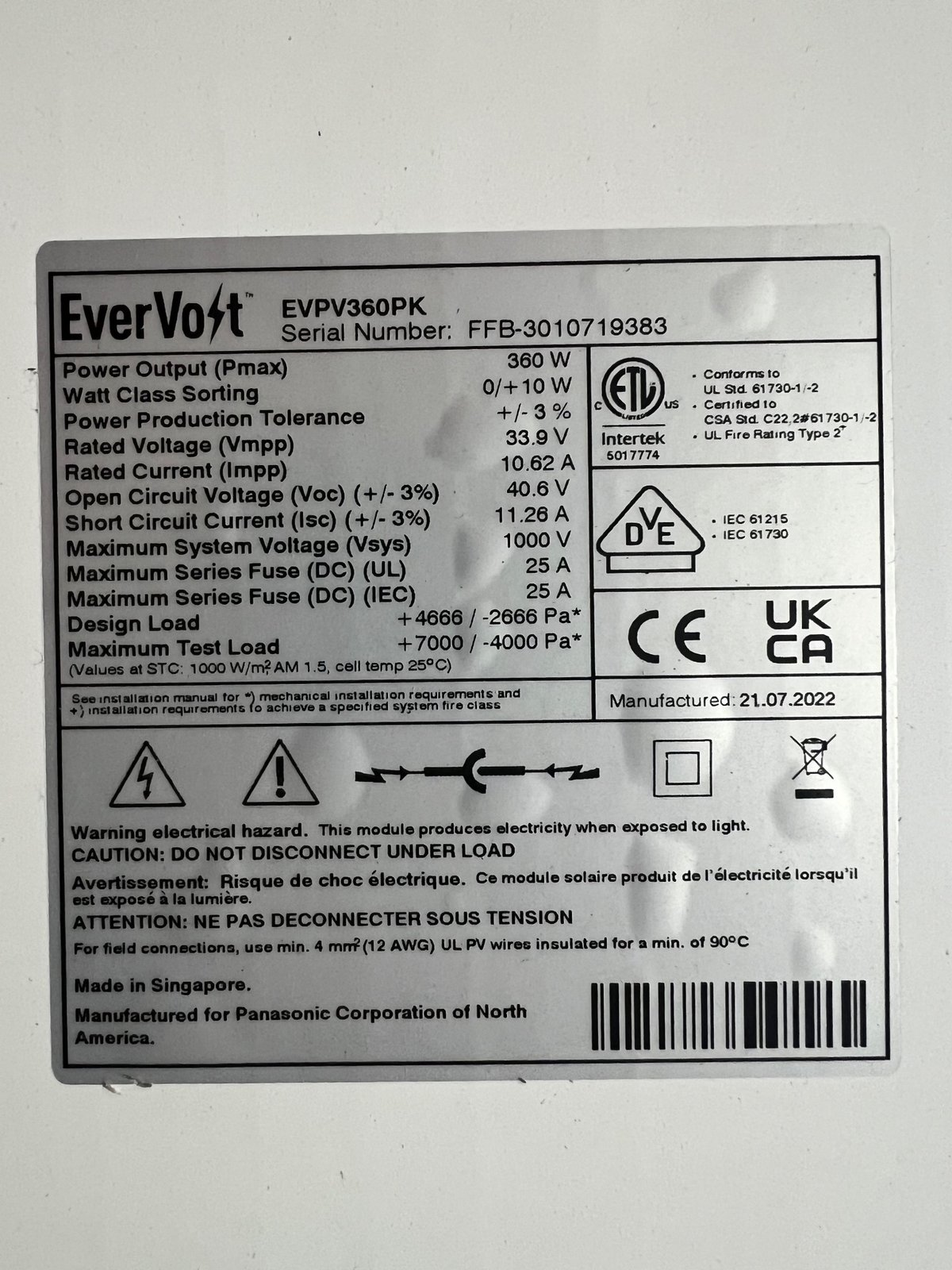
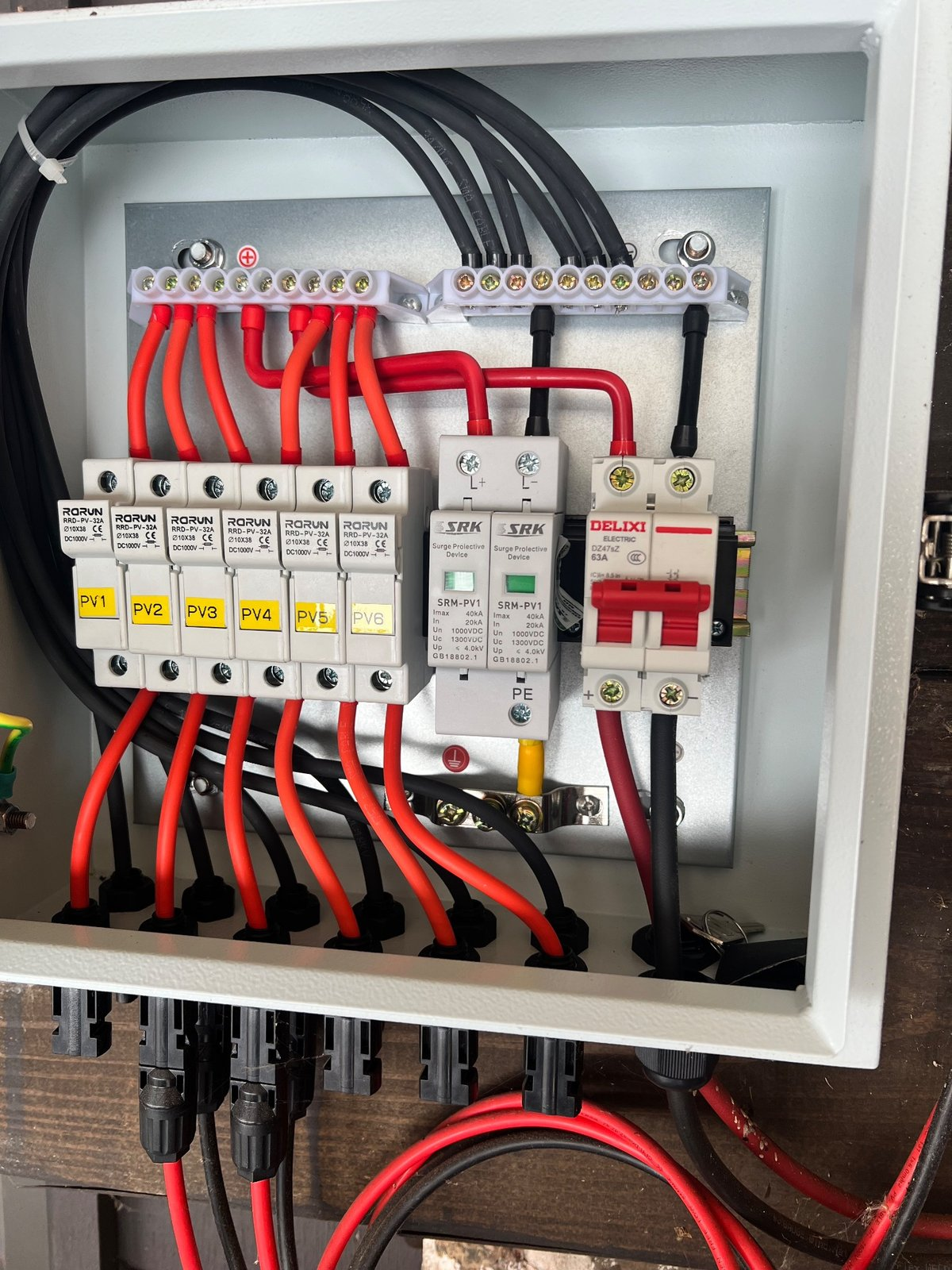
Panels: Four panels wired as two sets of two panels in series. This doubled the voltage without increasing the amperage. Those two sets are then combined at the combiner box so that one set of leads connects to the charge controller.
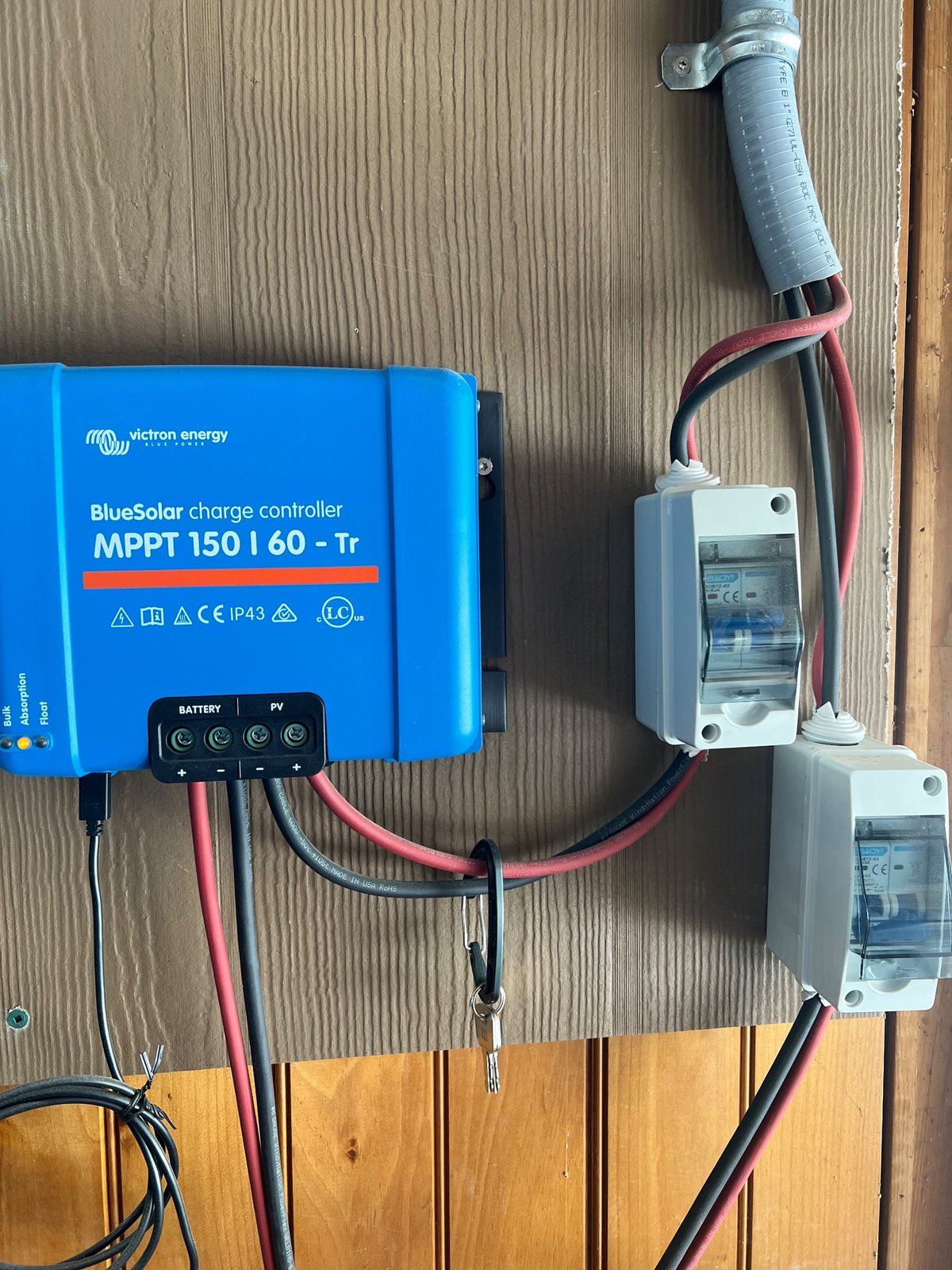
Breakers and isolation: Breakers and isolation were added in the combiner box (outside near the panels), between the combiner and charge controller, and between the batteries and the load.
Load path: Load power is routed back outside to the outdoor unit, which then powers the indoor unit.
System Photos
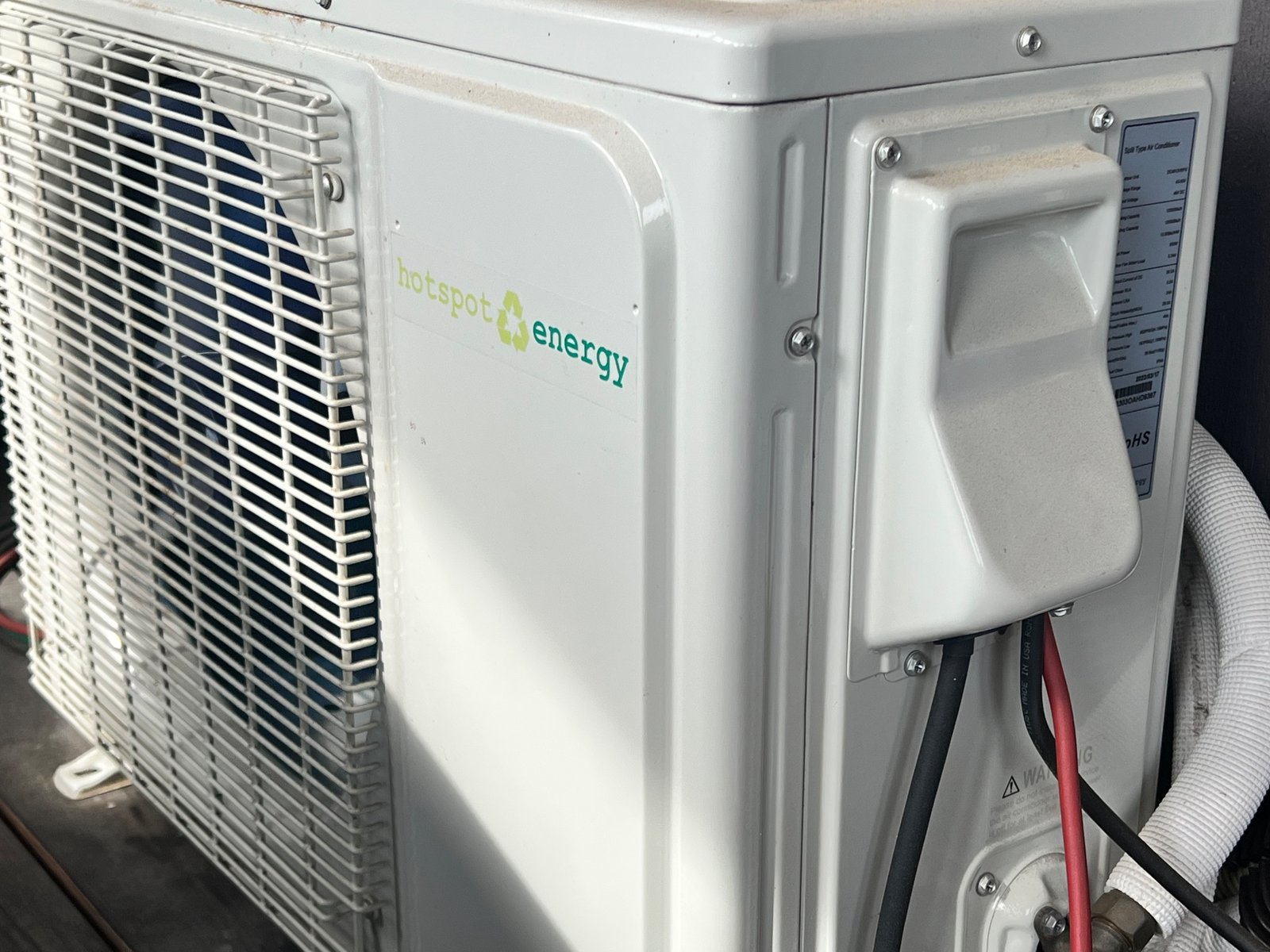
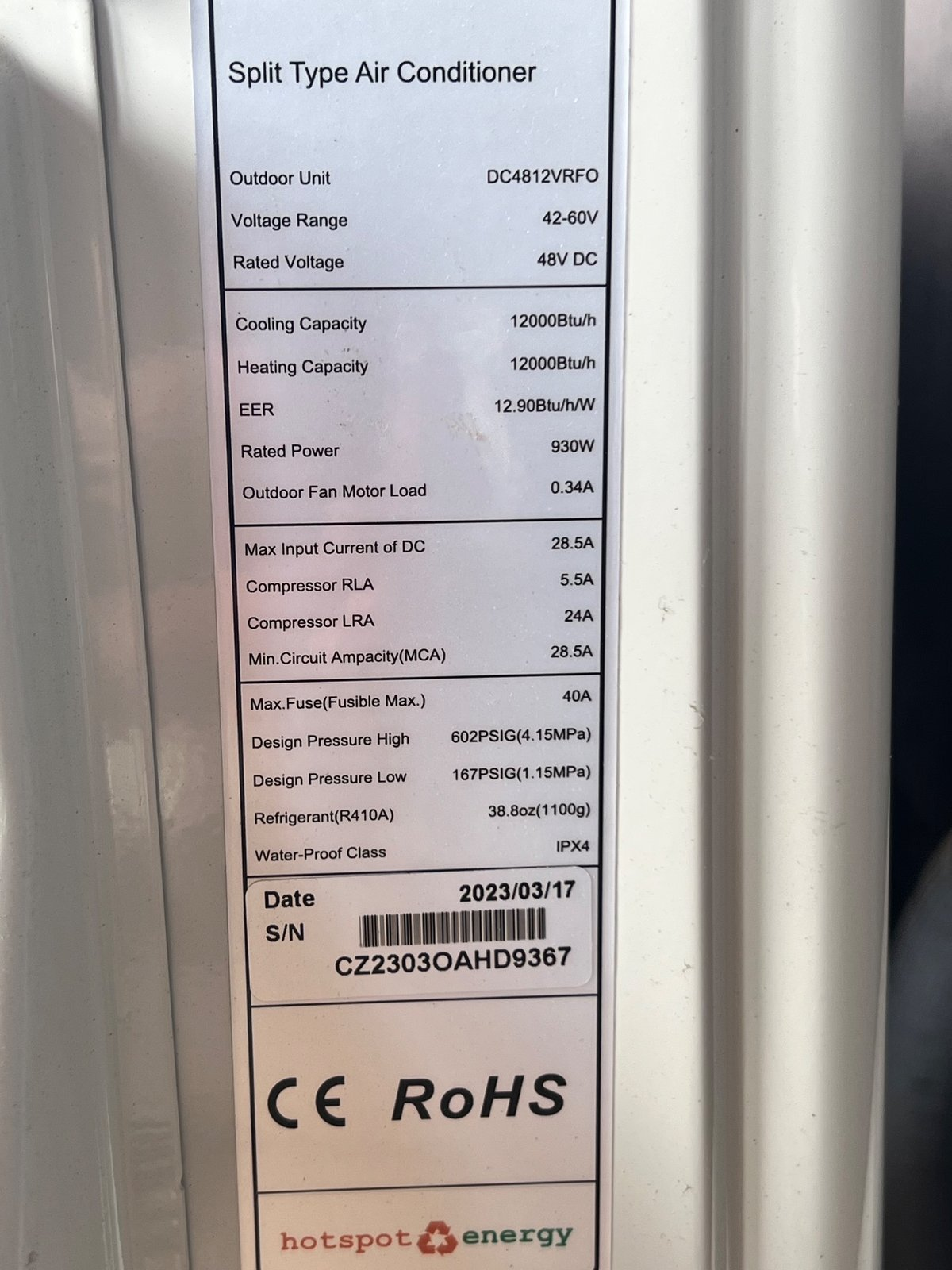
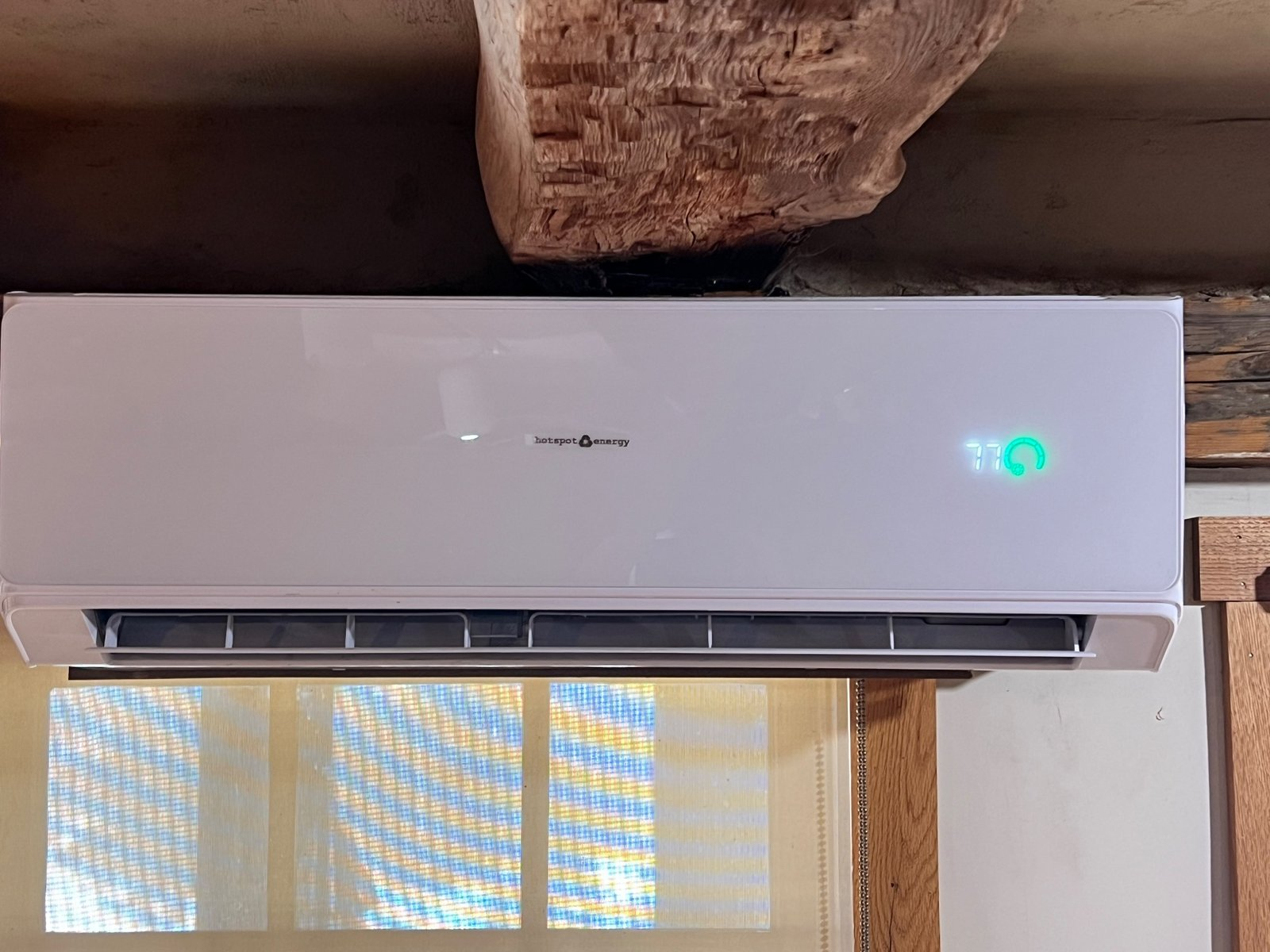
Field notes on the HotSpot DC4812VRF
The HotSpot unit is fine and functional, but a little unrefined. Their engineers are helpful, but it definitely seems like whoever built the firmware or components are no longer working there and the engineers are figuring it out by reverse engineering.
Chime: There is a chime that sounds when the unit is using the remote for temperature sensing. It dings every time it cycles on and off. The only way to disable it as reported by their engineers is to physically crush the speaker on the control board.
Celsius and Fahrenheit: You can change the displayed temperature between Celsius and Fahrenheit but the actual adjustments are clearly only in Celsius. Sometimes the Fahrenheit display jumps two degrees with one click and other times it does not change at all.
Thermostat behavior: The thermostat and the cut in and cut out tolerances are a bit sloppy. It took trial and error to find the temperature setting that got the system close to the target comfort level, which did not match the set temperature on the unit.
System Specifications
Heat Pump
- HotSpot Energy DC4812VRF
- 1 ton (12,000 BTU)
- 48V DC native
- Rated power: 930W
- Max DC input current: 28.5A
- Cost: $2,095 (included indoor + outdoor unit and line set)
Solar Array
- 4 × Panasonic EverVolt 360W panels
- 1.44 kW nameplate
- ~1.9 kW observed peak under ideal conditions
Charge Controller
- Victron BlueSolar MPPT 150/60
Battery Bank
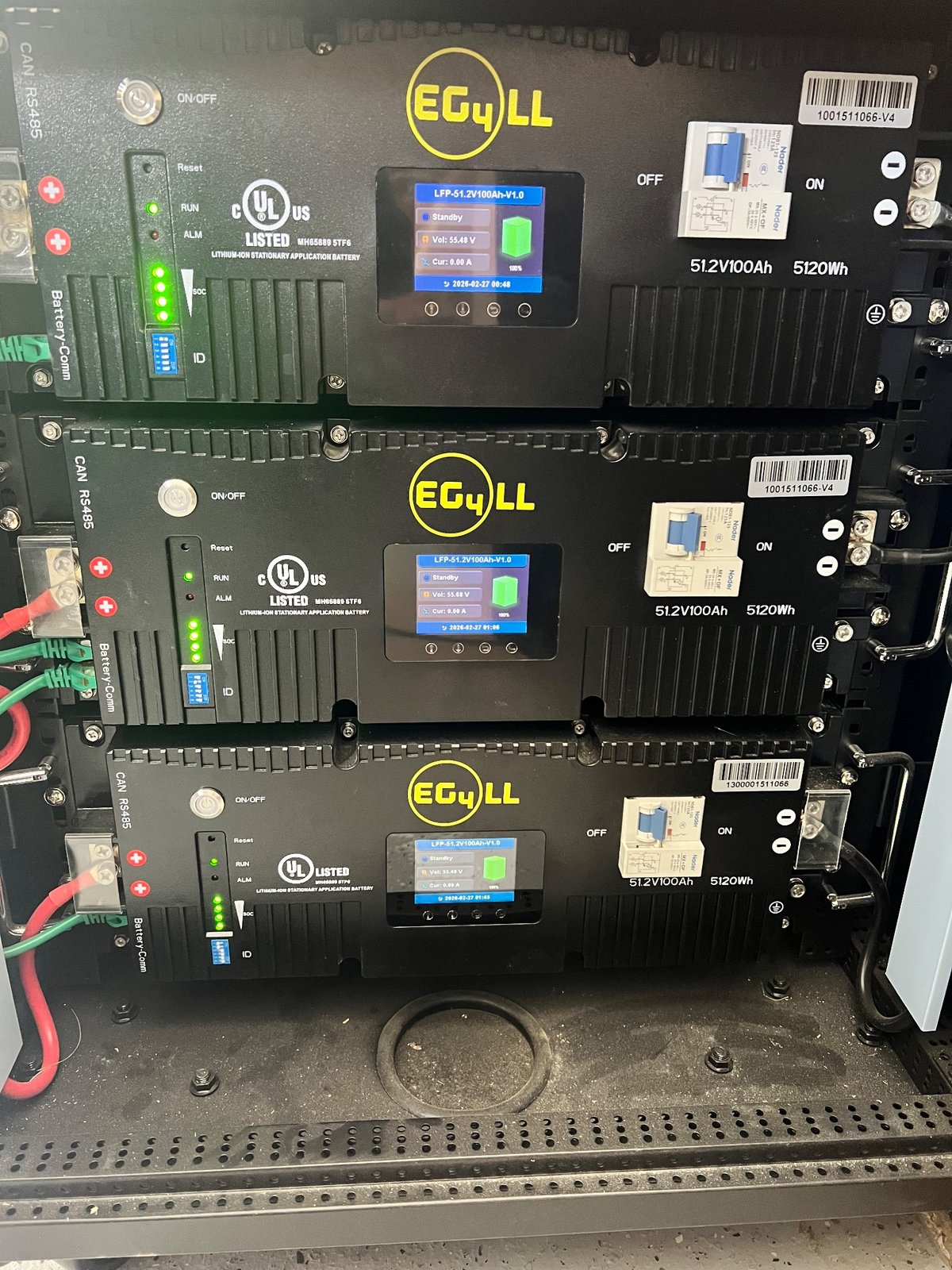
- Initially: 1 × EG4 LL (5.1 kWh)
- Expanded to: 3 × EG4 LL (15.3 kWh total)
Total System Cost
Approximately $6,300+
No inverter required.
Why 48V DC Instead of a 240V Mini Split?
A conventional system requires:
Solar → Battery → Inverter → AC Mini Split
That adds:
- Inverter cost
- Idle draw
- Surge sizing
- Conversion losses
This system eliminates the AC conversion stage entirely.
For a dedicated HVAC load, that materially simplifies architecture.
Performance with 5 kWh of Storage
With a single battery:
- Reliable daytime operation
- Limited overnight runtime
- Rapid depletion during cloudy stretches
Storage was clearly the constraint.
Performance with 15.3 kWh of Storage
After expanding to three batteries:
- Overnight operation became stable
- Depth of discharge normalized
- Voltage stability improved under load
However:
At ~15 kWh of storage, the bottleneck shifted.
Generation, not storage, became the limiting factor.
When It Fails
Approximately four times per year, during:
- Multi-day winter cloud cover
- High-demand, low-irradiance summer events
The system drains to zero.
This is a predictable boundary condition in Climate Zone 4A.
Adding more batteries would not solve extended low-sun events.
Adding more panels would.
More Batteries or More Panels?
After ~15 kWh of storage, daily energy input governs system reliability.
If expanding further, additional solar generation would provide more resilience than additional storage.
That is the core design lesson from this system.
Comparison: 48V DC vs 240V Mini Split
A conventional 240V mini split has also been installed in a separate building.
240V Mini Split
- Pros: simple, unlimited runtime on grid
- Cons: grid dependent, requires inverter if battery-backed
48V DC System
- Pros: direct battery operation, no inverter losses, partial energy autonomy
- Cons: production limited, seasonal variability
This DC system is not a grid replacement.
It is a strategic supplemental solar HVAC system.
Related Planning Resources
- Explore the solar sizing methodology for off-grid HVAC loads to estimate required generation.
- Review the battery storage planning guide for overnight runtime when evaluating storage expansion.
- Compare system design tradeoffs for DC-native and AC-coupled systems before finalizing architecture.
- Use generator backup planning for prolonged low-sun periods to cover rare seasonal deficits.
Key Takeaways
- DC-native HVAC simplifies system design.
- After ~15 kWh of storage, generation becomes the constraint.
- Climate zone matters more than spreadsheet autonomy estimates.
- Supplemental solar HVAC is attainable without whole-home batteries.
This case study was prepared by Pineville Design